The drip is small
Water moves quietly. Chapter 2 starts with the early-repair mindset, then separates manageable fixes from the leaks that need a licensed plumber.
A plain-English field guide to safer DIY decisions, common household repairs, maintenance routines, and the moments when calling a licensed professional is the right move.
Instant PDF · phone, tablet, or computer · educational reference

The hard part is often not turning a screwdriver. It is knowing what the symptom means, what can wait, what can be handled carefully, and what should stop at the edge of DIY.
Water moves quietly. Chapter 2 starts with the early-repair mindset, then separates manageable fixes from the leaks that need a licensed plumber.
Chapter 3 gives you a pre-work sequence and clear boundaries around switches, outlets, GFCI, AFCI, fixtures, and overloaded circuits.
Doors, windows, weatherstripping, HVAC maintenance, gutters, and roof details all get their own practical decision points.
Each chapter is organized around the same useful question: what are you looking at, what is safe to attempt, what does it cost to wait, and when should you call a pro?
The 5-question DIY filter, emergency shutoffs, essential tools, PPE, and safety and legal limits.
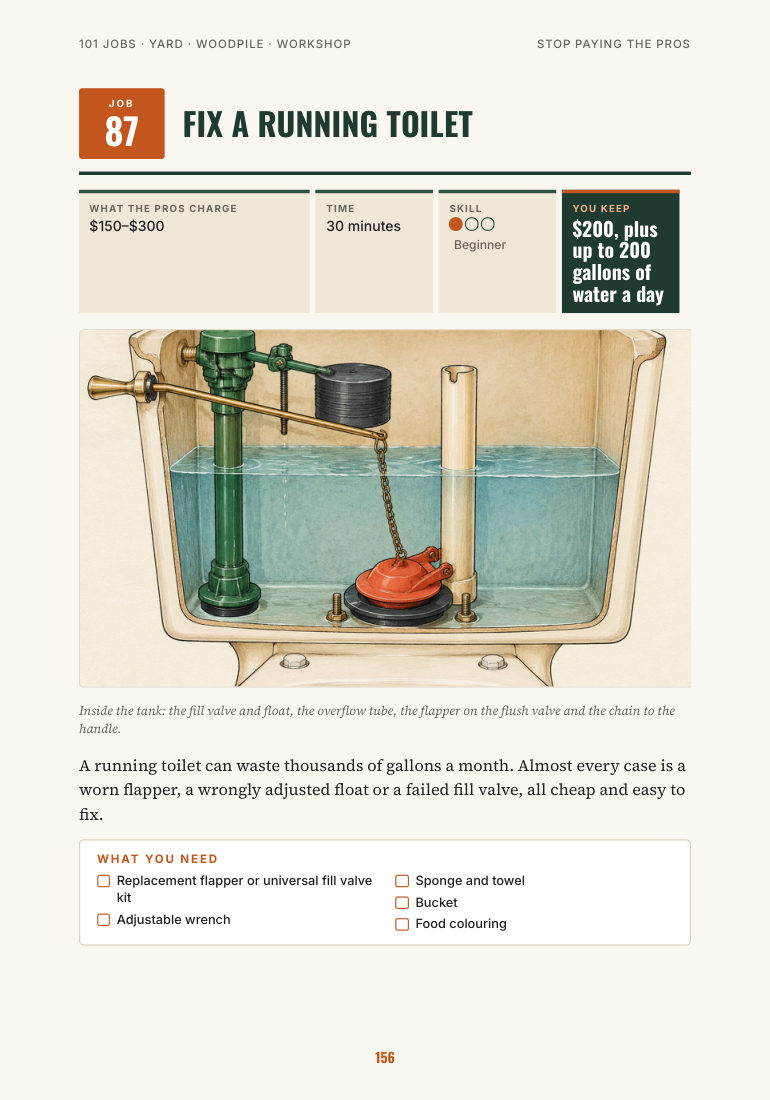
Dripping faucets, running toilets, sink traps, under-sink leaks, temporary PEX or CPVC control, and red lines.
Switches, outlets, GFCI, AFCI, light fixtures, breakers, and the boundary between DIY and licensed work.
Know the system first, maintain it seasonally, and troubleshoot common failure modes without guessing.
Sticking doors, weatherstripping, hardware adjustments, window trim, and exterior caulking.
Small holes, dents, nail pops, moderate patches, feathering, texture, paint, and cost breakdowns.
Squeaks, cracked tiles, failed grout, damaged vinyl or laminate, moisture checks, and red-line criteria.
Ladder safety, active leaks, damaged shingles, flashing, penetration seals, and gutter defense.
A structured way to investigate appliance and household-system symptoms before ordering parts.
The final layer: finish work that makes repairs disappear and helps a home stay cared for.

These are examples of the kinds of situations the book is built to clarify, not verified customer testimonials.
You learn how to shut down the immediate risk, inspect the trap and supply connections, and recognize when a small leak is already becoming a cabinet, subfloor, or mold problem.
The flooring chapter treats moisture as a decision point, not a cosmetic nuisance. It gives you a ten-minute inspection before you pry, patch, or cover it.
The safety-first sequence helps you identify the boundary before the work begins, with clear cues for when the correct repair is to stop and call a licensed professional.
One practical reference. Ten chapters. A safer way to decide what happens next.
One-time purchase · no subscription · educational reference only
No. It is an educational reference that helps you understand common household situations and make safer decisions. Local codes, building conditions, and the severity of a problem vary. The book repeatedly identifies situations that should move out of DIY and into qualified professional help.
No. The opening chapter begins with a five-question filter, emergency shutoffs, tools, PPE, and the information you need before touching a repair. Experienced homeowners can use the chapter checklists; newer homeowners can use the decision boundaries.
You receive the 121-page ebook PDF, covering ten chapters from safe repair decisions through finish work. It is designed to read on a phone, tablet, or computer and remains yours after purchase.
No. It focuses on common homeowner repairs and maintenance decisions. It cannot diagnose every property, system, code requirement, or hidden condition. That limitation is deliberate: knowing when the book is not enough is part of using it safely.
Yes. The first chapter is useful before an emergency because it covers shutoffs, tools, PPE, and the DIY filter. The chapter list also makes it easy to jump directly to plumbing, electrical, HVAC, weatherproofing, flooring, roofing, appliances, or finish work.
Download the guide while the problem is still a question. Read the relevant chapter before you buy parts, open a wall, climb a ladder, or decide that a warning sign can wait.
Get the ebook · $9.99